




Cologne is a city of layers. Roman roots, medieval trade, working class grit, and a famously open hearted local culture all come together here. And nowhere is that story told more vividly than through its food.
Unlike Berlin’s ever evolving food scene, Cologne holds tightly to its culinary traditions. The dishes are hearty, honest, and deeply connected to the people who shaped the city. Each one tells a story of survival, celebration, and identity.
Let’s take a closer look at some of Cologne’s most iconic dishes and the stories behind them.
Reibkuchen and Rievkooche
The Taste of the Streets
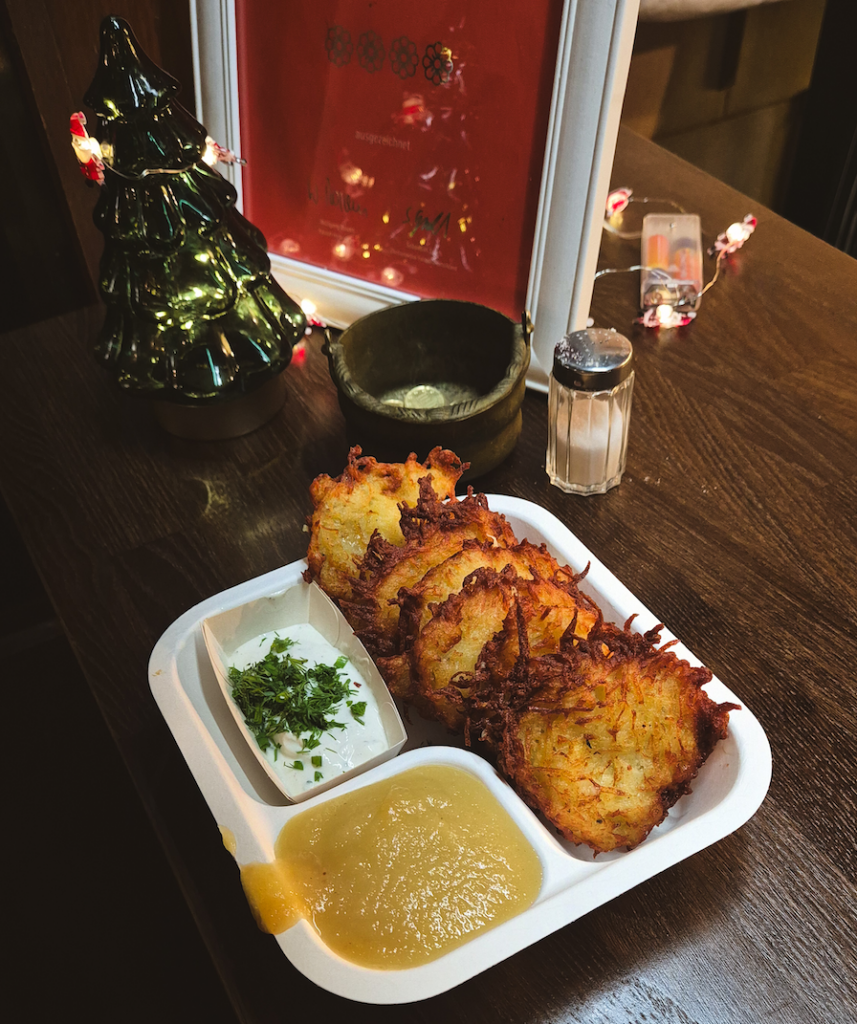
Reibkuchen, or Rievkooche in Kölsch dialect, are crispy potato fritters that you will smell before you see. Golden brown, sizzling on hot plates at markets and street corners, they are Cologne’s ultimate comfort street food.
These simple pancakes made from grated potatoes, onion, and seasoning date back to times when ingredients were scarce and meals needed to be filling. Potatoes were cheap, accessible, and versatile, making them a staple for working class families.
Traditionally served with apple sauce, the contrast of sweet and savoury reflects a broader German culinary habit of balancing flavours in unexpected ways.
Today, you will find them everywhere from Christmas markets to local fairs. They are quick, satisfying, and deeply nostalgic. A bite of Rievkooche is a bite of everyday Cologne life.
Himmel un Ääd
Heaven Meets Earth
Translated as heaven and earth, Himmel un Ääd perfectly captures the poetic simplicity of Rhineland cuisine. Apples represent the heavens, hanging from trees, while potatoes come from the earth below.
The dish combines mashed potatoes, stewed apples, and fried blood sausage. On paper it may sound unusual, but together it creates a rich, slightly sweet, deeply savoury experience.
This dish reflects Cologne’s agricultural past and its resourcefulness. Nothing was wasted. Every ingredient had a purpose. Blood sausage, in particular, was a way to use every part of the animal, a tradition rooted in respect for food and necessity.
Himmel un Ääd is more than a dish. It is a philosophy of balance, between sweet and savoury, luxury and necessity, heaven and earth.
Halve Hahn
The Sandwich That Isn’t What You Expect
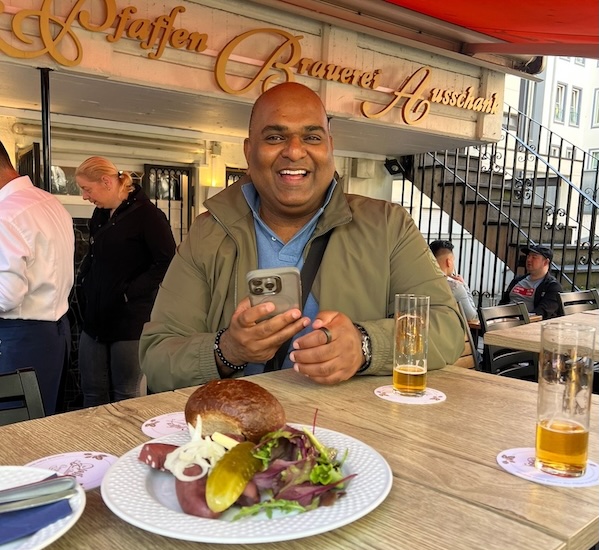
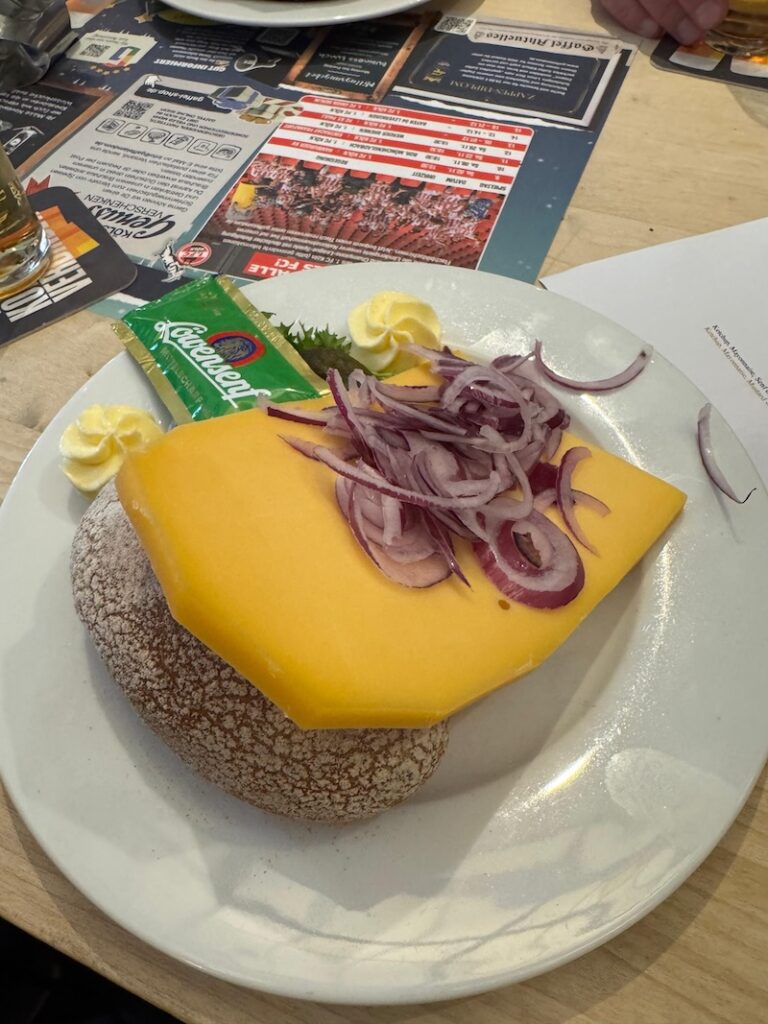
If you order a Halve Hahn expecting half a chicken, you are in for a surprise. What arrives is a rye roll with cheese, mustard, and onions.
The name is part of Cologne’s playful humour and love for wordplay. There are many stories behind it, but the most popular suggests it originated as a joke in a pub, where a guest ordered a half chicken but was instead served this simple sandwich.
Over time, the name stuck, and the dish became a staple in traditional breweries.
The Halve Hahn represents Cologne’s pub culture. Simple food, good beer, and a strong sense of community. It is typically enjoyed with a glass of Kölsch, the city’s light, crisp beer served in small glasses that are constantly refilled.
Flönz
Cologne’s Blood Sausage Tradition
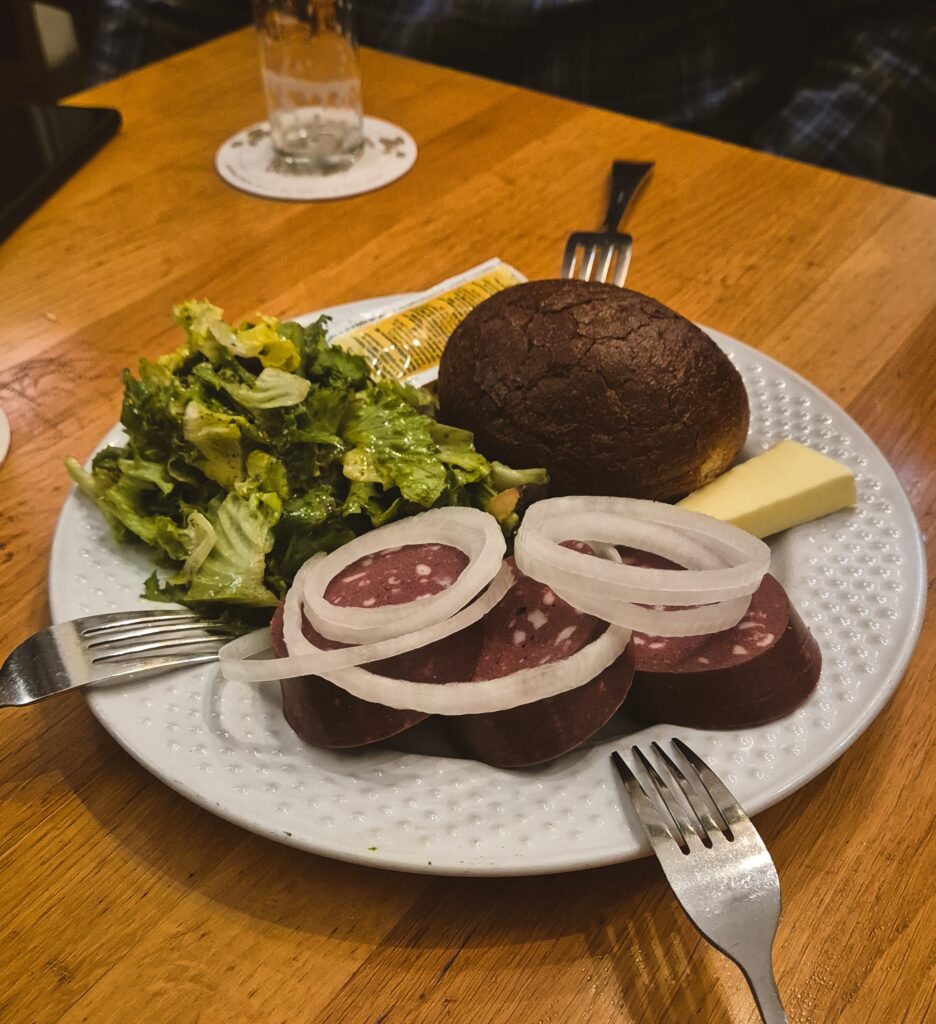
Flönz is Cologne’s version of blood sausage, and it holds a special place in the city’s culinary identity.
Like many traditional European dishes, it was born from necessity. Using every part of the animal was essential, especially in poorer times. Over generations, what began as a practical solution became a beloved delicacy.
Served fried, often with onions, mashed potatoes, or alongside Himmel un Ääd, Flönz is rich, hearty, and unapologetically traditional.
In Cologne, it is not just food. It is heritage. You will find it in breweries, family kitchens, and on menus that proudly celebrate local identity.
Ähzezupp
A Soup for the Soul
Ähzezupp, or pea soup, is the definition of comfort food. Thick, warming, and packed with flavour, it has long been a staple during colder months.
Made with split peas, vegetables, and often smoked sausage, it was designed to nourish and sustain. It is a dish that speaks to Cologne’s working class roots, where meals needed to be both affordable and filling.
Today, it is still enjoyed in traditional settings, especially in breweries where it pairs perfectly with a fresh Kölsch.
A City Told Through Food
Cologne’s cuisine is not about refinement or trends. It is about identity, history, and community.
These dishes tell stories of resilience, humour, and togetherness. From the sizzling street food stalls serving Reibkuchen to the cosy breweries pouring Kölsch alongside Flönz, every bite connects you to the city’s past and present.
For visitors, exploring these foods is one of the most authentic ways to understand Cologne. Not through monuments or museums, but through shared tables, local flavours, and the stories that come with them.